Last Thursday I was riding in a Tesla with a white leather interior, being driven by a kind woman named Hoang into the heart of Washington DC. As we crossed the bridge over Theodore Roosevelt Island on the Potomac River, the sun suddenly pierced the clouds, alighting the spire of the Washington Monument, dark rain hanging behind.
I was moved by the grandeur, just as the grandeur was designed and built to move me.
I was arriving in DC for the first time, at the invitation of the Academy of American Poets, in celebration of being named a Poet Laureate Fellow along with 21 others from across the country. The weekend was gratifying and challenging, complicated and deeply interesting. The poets gave me hope, which is what poets tend to do, but this is a particularly potent lot and I’m so honored to be among them.
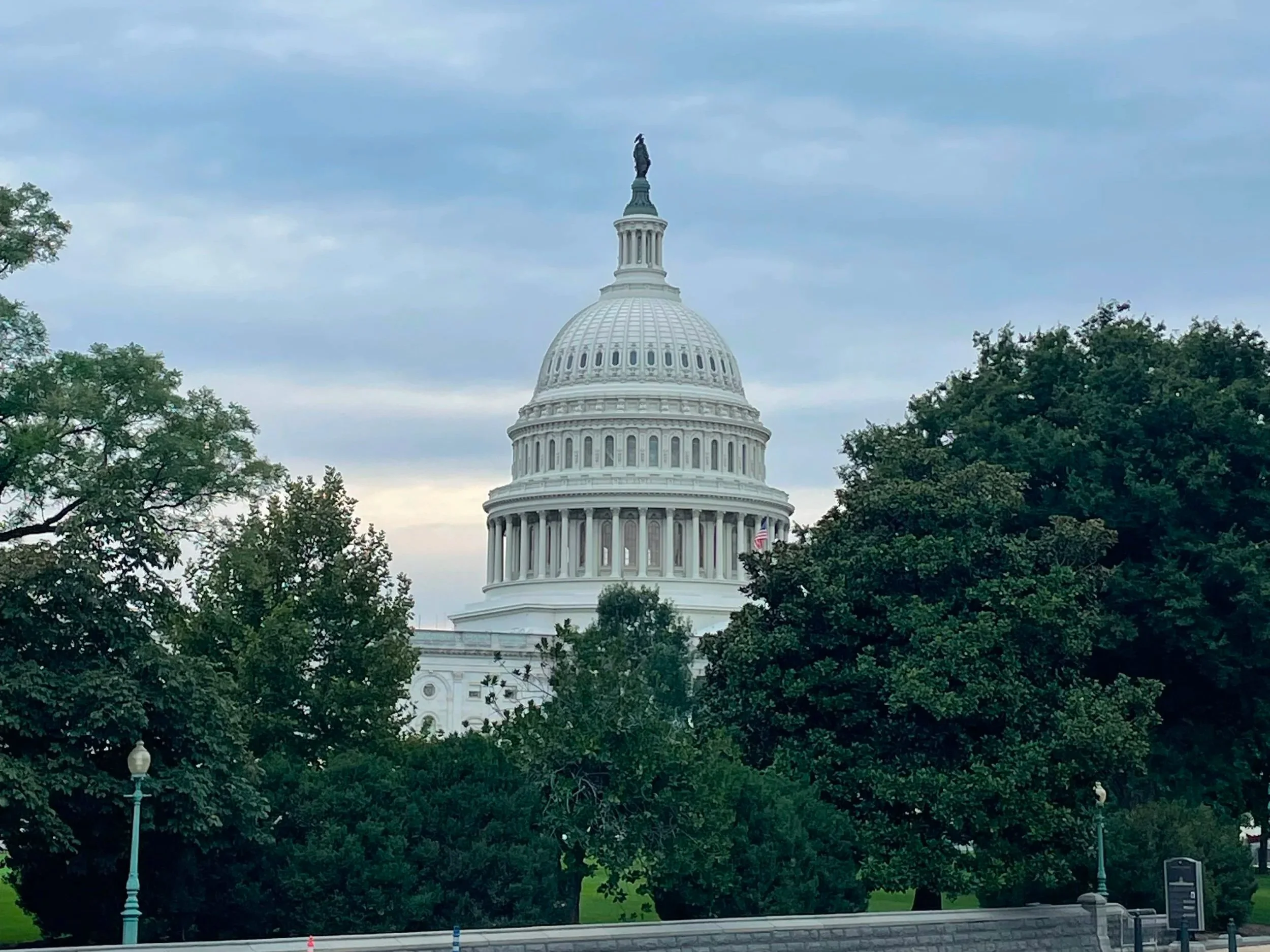
But I wasn’t prepared for the architecture’s impact on me – the barrage of symbols of the nation-state where I’ve spent nearly my whole life. As an artist I’ve learned to love a sharp contradiction, to recognize the intrinsic energy there. In that way, the weekend was energizing.
Like a person, a political system should be judged not by its words but by its actions.
To paraphrase an axiom, a society is what it does. And to be clear, the benevolent mask of the United States has been ripped away forever by the disgusting violence being inflicted on the people of Gaza (ongoing), on the people of Cuba (ongoing), on so many peoples around the world – and here at home – for so long (and still). There is absolutely no cause, no rationale, no words that can justify the starving and killing of children.
Here among the Corinthian columns, in the pit of the belly of the imperial beast, the architects looked to Rome not for the inspiration of democracy, but for the imposition of domination.
The buildings made me feel small for a reason, and it’s worth considering the dimensions of that reason.
I spent all of Sunday afternoon in the National Museum of African American History and Culture, reading of Jefferson enslaving his own children borne by Sally Hemings, reading of Lincoln watching from his window the chain gangs of enslaved people building the gilded Capitol, the stately White House – building all of it, everything.
The visit deepened my understanding that any and all progress towards justice, towards true democracy, has always come from the fight back of the people, never from the top.
The enslaved freed themselves, built the world anew. The arts and culture of Black people has always been essential to the United States.
And yet all over DC the buildings were draped in flags for “America 250.” As has been pointed out before, the American Revolution wasn’t a true revolution at all, but a revolt of the wealthiest against regulation. The material conditions remained the same: the same few people owned everything, and they kept in place the same economic system – a system that benefited only them.
The “Founding Fathers” were all billionaires in today’s money, and they were fighting against paying taxes. Twelve of the first fifteen presidents were slavers. They had no intention of making their words actually mean anything (“All men are created equal ... endowed with inalienable Rights... Life, Liberty...”) – they were making too much money.
The period immediately following the Civil War was as close to a real revolution as we’ve had in the US: a true change in the order of things. And that war was won thanks to the enslaved walking off the death camps that had held them: in his book Black Reconstruction (1935), W.E.B. Du Bois posits their actions as a true general strike of the workers. Real home-of-the-brave activities.
Which is why true Reconstruction was ultimately destroyed by the wealthy, who have always understood solidarity and how to wage class war. The elites from the North allied with those from the South – who were never punished nor made to pay. Those who benefited from enslavement were never really against it: as John Washington reminds us in his new book How to Close a Camp: Dispatches from the Fight Against Immigrant Detention, “as late as 1861 Lincoln worried that the abolitionists would ‘upset our applecart.’”
Meanwhile, all weekend I couldn’t figure out how to get to the Museum of the American Indian: the entire National Mall was closed off for the America 250 IndyCar race. National Guardsmen sat idling in military trucks, scrolling on their phones as citizens on the sidewalk begged for food. On Sunday commercial flights were delayed for hours to facilitate the flyover of stealth bombers. The absurdity of it all –
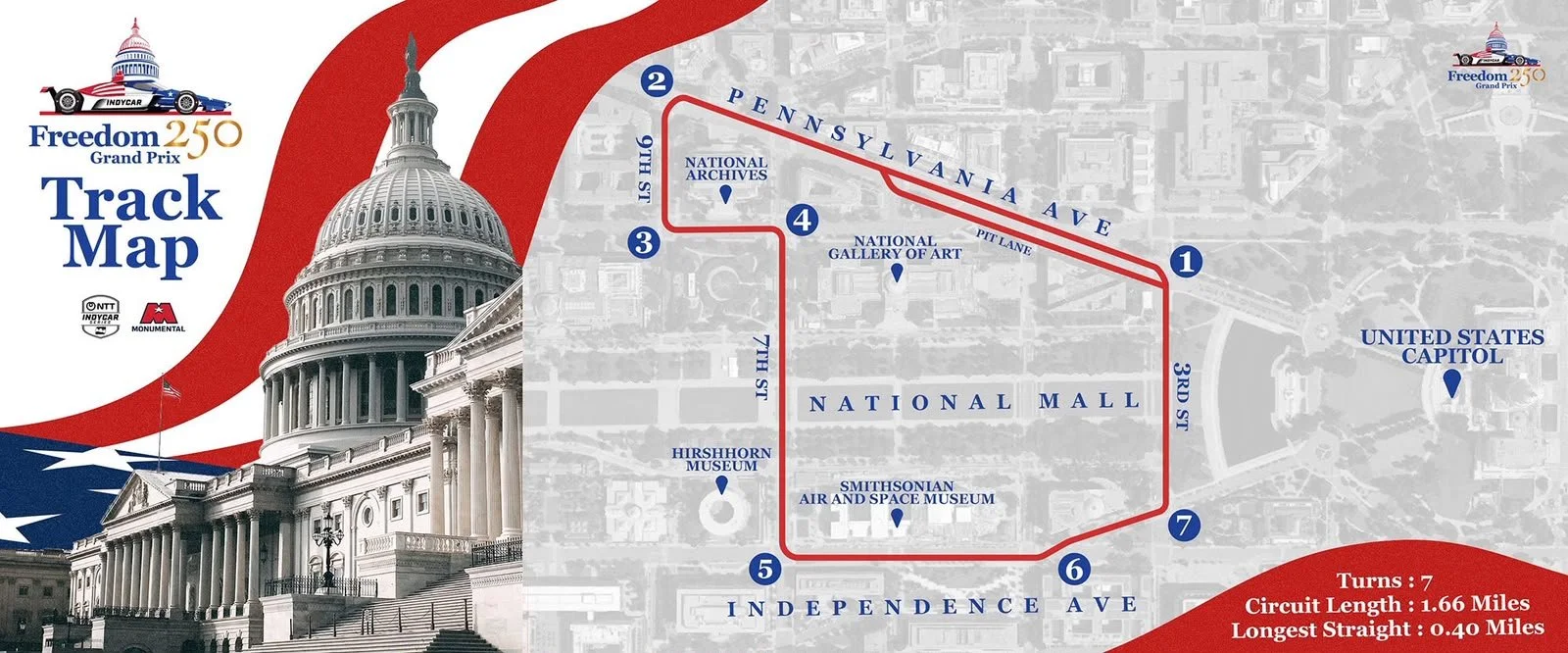
American 250 Grand Prix
Galas and yachts in the richest country in the history of the planet, where half of children are being raised in poverty, where half of all people are struggling to afford food and gas every month. A country that can’t maintain its crumbling infrastructure nor provide healthcare to its people, but gives out billions of our money (on no bid contracts) to build a second border wall that is even more unnecessary than the first. From a DC rooftop on Saturday afternoon I looked at my phone, watching the land I love being desecrated by a contractor’s bulldozer.
Minutes later, the poet Mayda del Valle showed me what was playing on her screen: the people of Puerto Rico in the streets, enraged at being left without drinking water – not for the drought of the sky but for the drought of justice.
Corruption and colonization are the same thing. A colony is a nation held hostage. Thirst for profit, bulldozer for profit.
All the abundance squandered (there has always been enough for all of us), and the system functioning exactly as designed: taking what little money we have and giving it to those who already have too much. Billionaires behind every billboard and not a bite to eat. Our whole lives spent working, our whole lifetimes not long enough to pay all the debts they’ve burdened us with, as we work and work and work in pursuit of happiness.
Land of the free: where being born on the wrong side of an imaginary line (“border”) means you can be disappeared into a for-profit concentration camp (“detention center”) and held indefinitely without trial. Freedom of speech: but to say certain words like inclusion or equity or genocide will get you punished – losing a grant or losing your whole livelihood. Pursuit of happiness: that lifelong, treadmill quest to be able to afford the admission ticket to contentment. The architecture of all this worn-out, brittle language, hiding what it pretends to reveal.
And I was there this weekend, at the center of the contradiction, receiving the biggest professional recognition of my life. Standing on marble steps, overwhelmed to tears with such gratitude to be invited to represent Tucson, the city I love.
To be there practicing the craft of poetry, which has slowly but surely become my life’s work, the gift I give and receive.
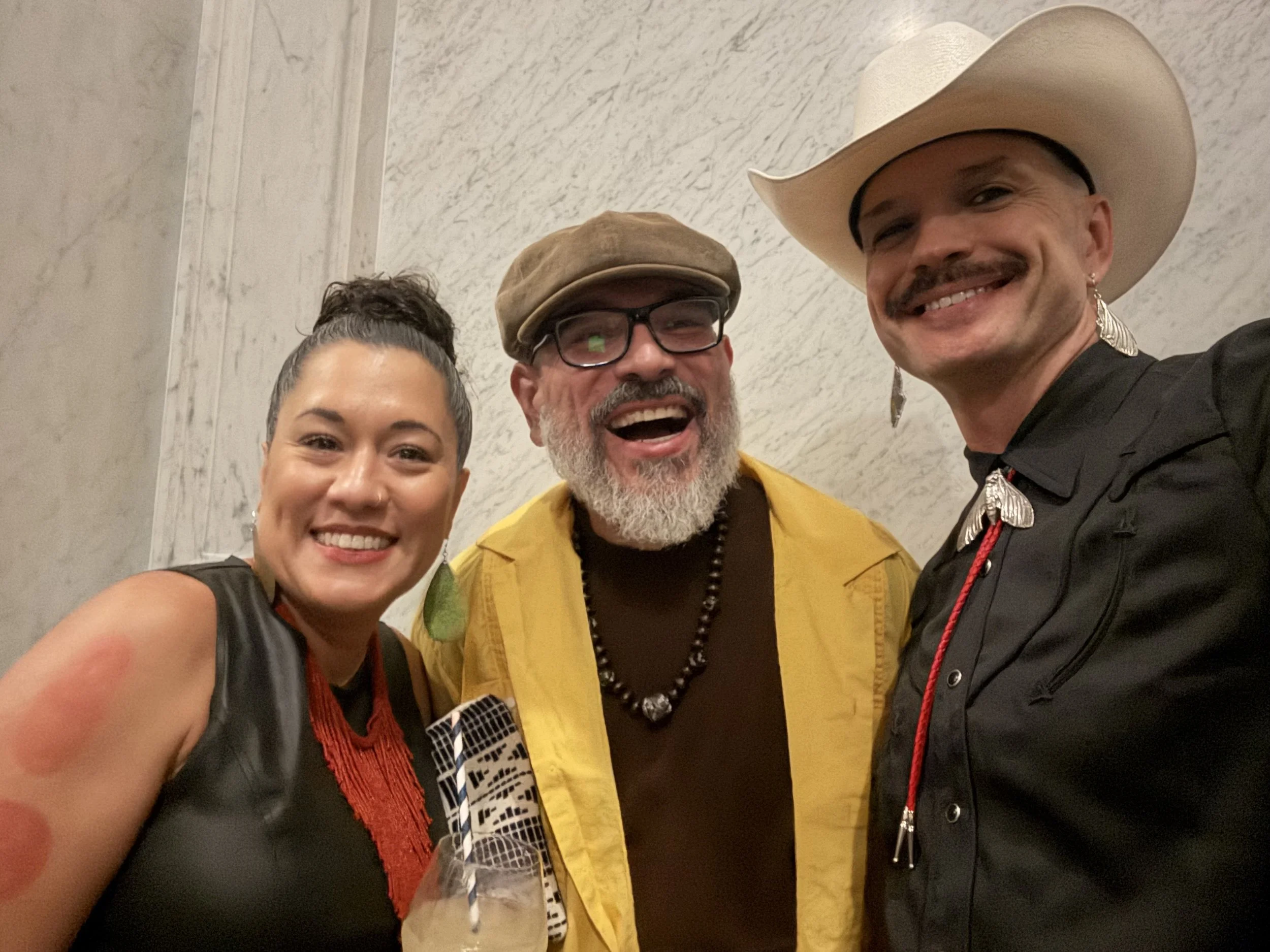
With Mayda del Valle and Manuel González
To be surrounded by colleagues I’ve long looked up to, like Mayda, Carolyn Forsché and Manuel González, discussing our ongoing work alongside new friends and accomplices from across the country: Crisosto, nicole, Michelle, Lady, Brenda, Antonio, Kathleen, Justin, Danielle, Raina, Genny, Moira, Erin, Emmanuel, Kevin, Derek, Jake and Mark.
To see my words published by the Academy of American Poets, where so often I have gone to learn of the vibrant, world-building possibilities of language. To understand, profoundly, how unalone I am in doing this work.
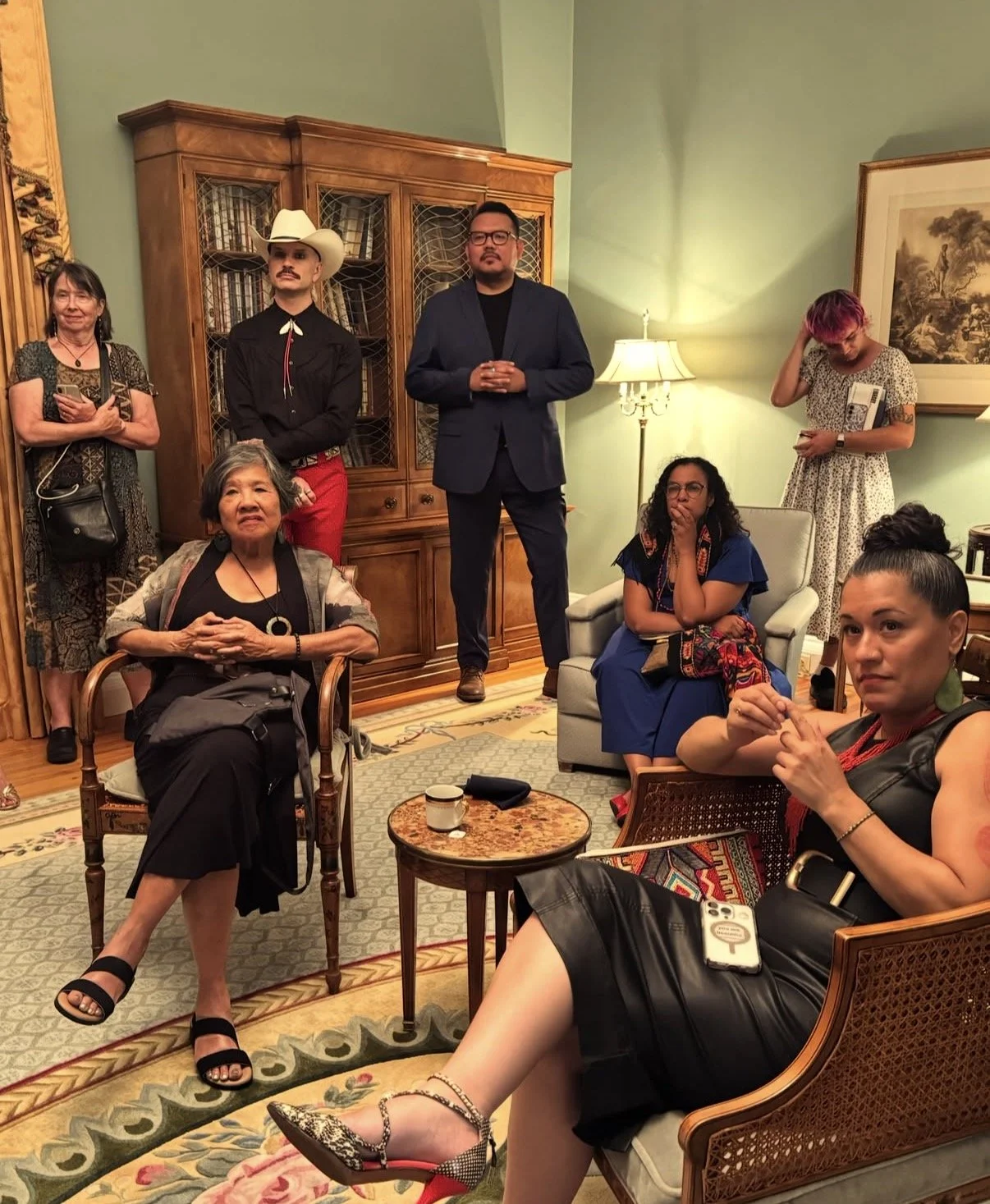
Photo by Antonio De Jesús López
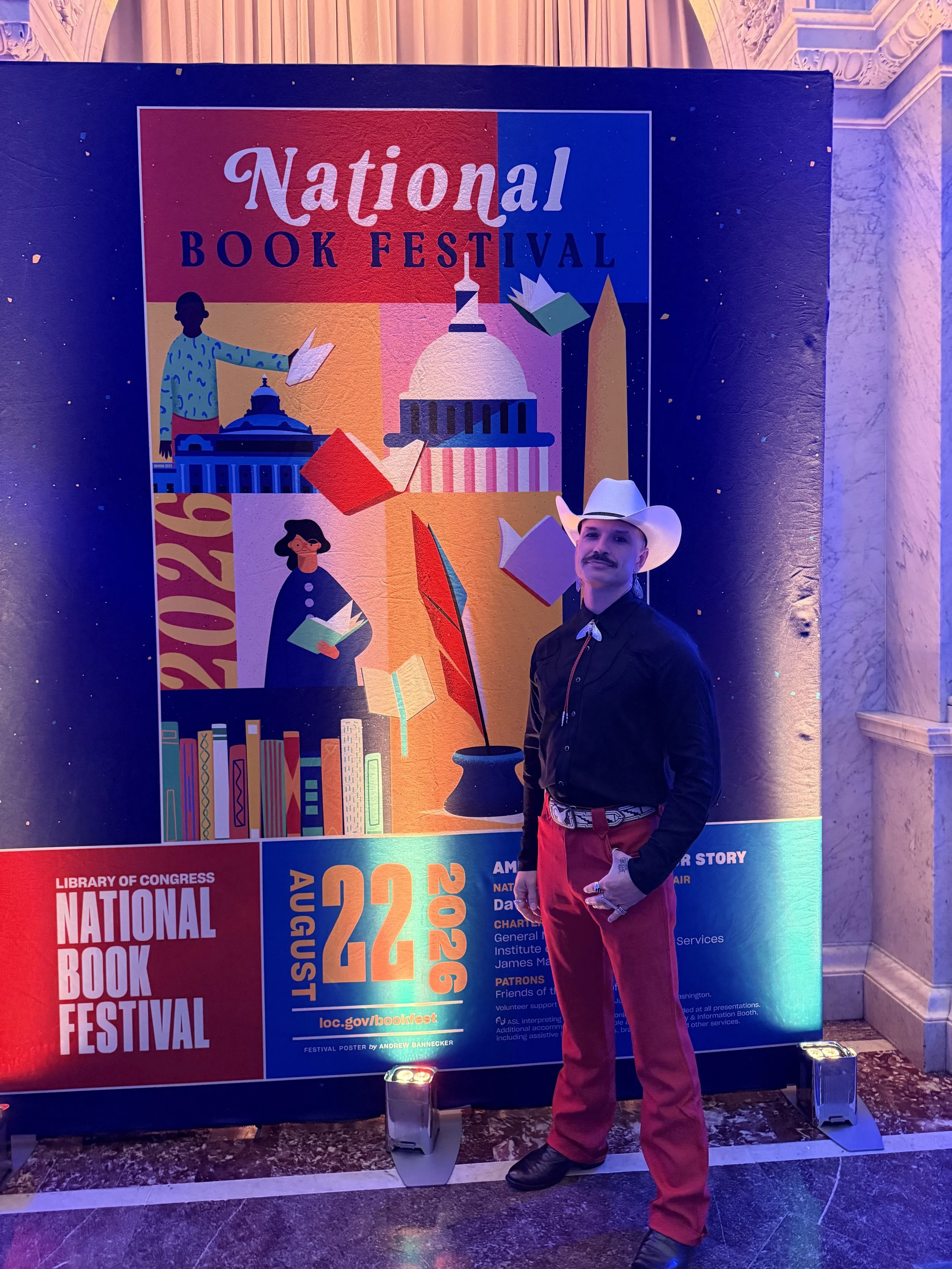
To stand breathtaken under the cupolas in the Library of Congress, the nation’s largest and oldest, called “the Library of the People” by the acting Librarian of Congress in his opening remarks at the National Book Festival. Here, a Gutenberg bible. There, Mary Oliver’s notebook. Here, an original Kermit the Frog. There, the office of the US Poet Laureate, where Arthur Sze discussed with us the Transient Worlds of translation.
To be on stage at the National Book Festival (250!) in front of a standing-room-only audience, invited by the Academy and Library to read a poem addressing the contradictions that raised me.
Not bad for a kid from the ocotillo grasslands of rural Cochise County.
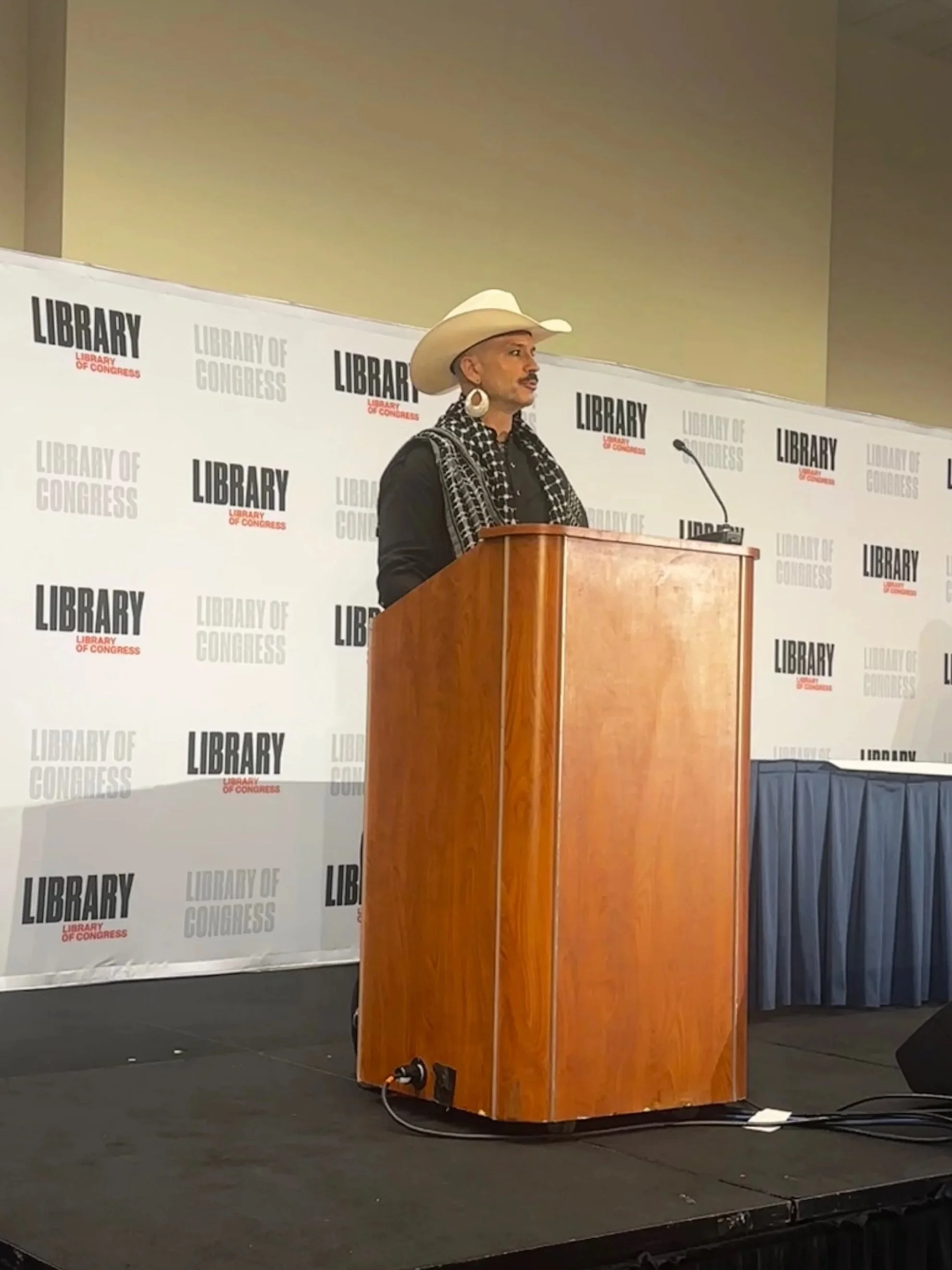
Reading for the Academy of American Poets and the Library of Congress at the National Book Festival.
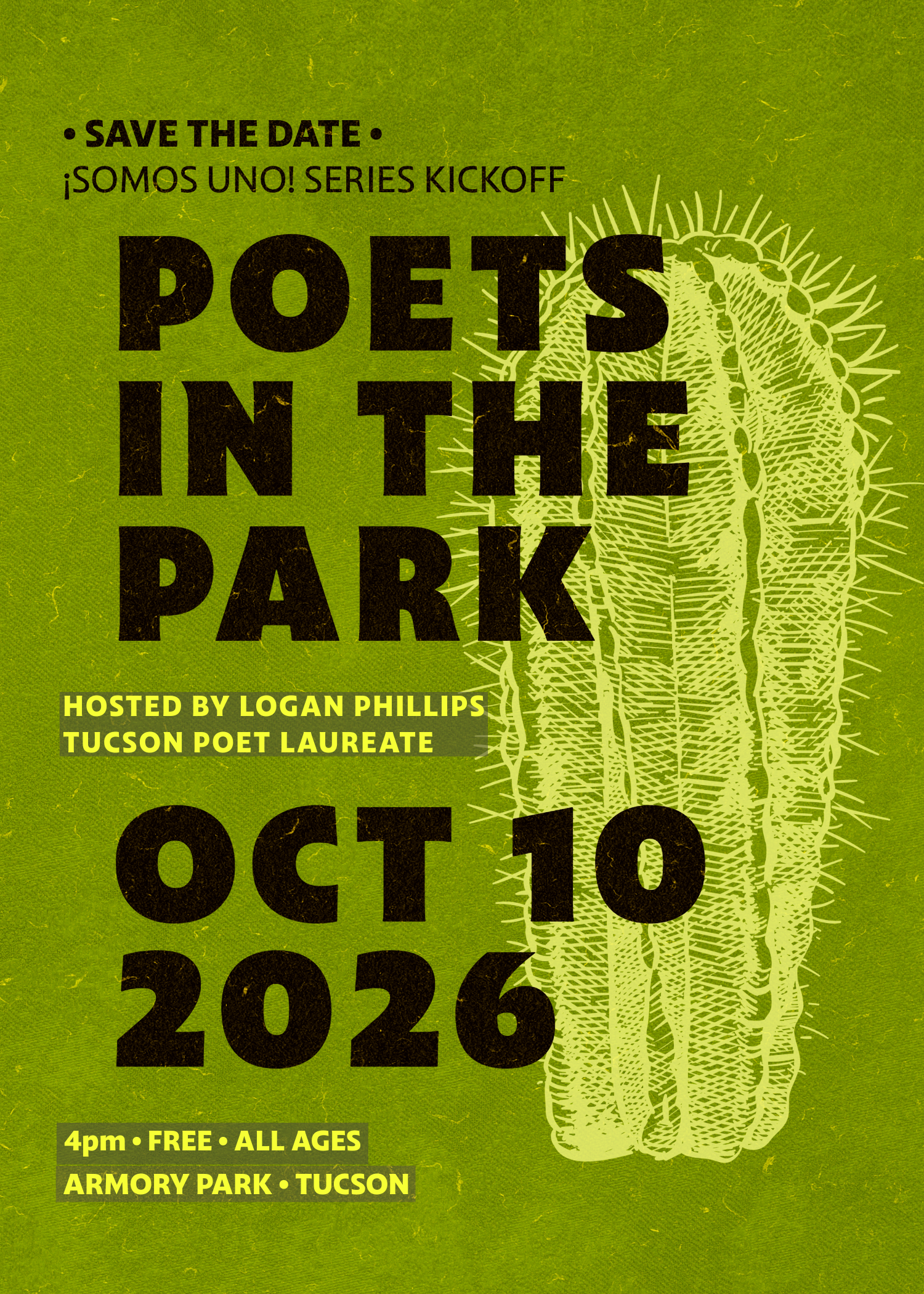
All of this was moving, and I struggle to articulate the extent. But more than the honorifics, what means the most to me is the material resources for Tucson.
I’m bringing home $15,000 to invest in the cultural life of our city.
Sure, that’s the same amount squandered on twenty four inches of useless double border wall, or what a stealth bomber pisses away in six minutes flying – but for us, here, it’s a lot of money. More than I’ve ever been able to move at once.
Under capitalism money means time. So this is time to do the work I most love, for the place I most love, to the best of my ability, as my parents and children, mentors and teachers have taught me to do.
Being a poet, doing this work, means holding both truths: gratitude and outrage. It means not looking away from the worst of what this country has become nor what it has always been.
Being a poet means speaking the truth: if we love this land, if we love our families and neighbors and children, we must fundamentally re-make this society to work for them, to work for all of us who make it work in the first place.
Poetry is not here to dull the pain of all these violent contradictions. In one sense, it is here to help us perceive it, articulate it, diagnose it inside us – not as inevitable, chronic pain, but as a symptom, a symptom of an illness that can be – and must be – cured collectively.
Waiting for hours in the airport for my cramped flight home, I can see it more clearly than ever: